What is Sea Glass?
What is Sea Glass?
Have you ever spotted a smooth, frosted piece of coloured glass on the beach and wondered where it came from? Sea glass is one of nature's most fascinating treasures, transforming discarded glass into beautiful gems through the power of the sea.
How Is Sea Glass Formed?
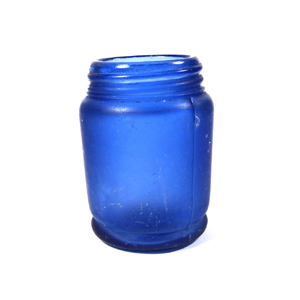
Sea glass begins its journey as ordinary glass, often from bottles, jars, tableware, or other glass objects that have found their way into the ocean. Over many years, the relentless action of waves, sand, and shingle tumbles the glass fragments, gradually smoothing away their sharp edges and creating their distinctive frosted appearance.
This natural process can take anywhere from 20 to 100 years or more, depending on the conditions and the type of glass involved.
Why Is Sea Glass Frosted?
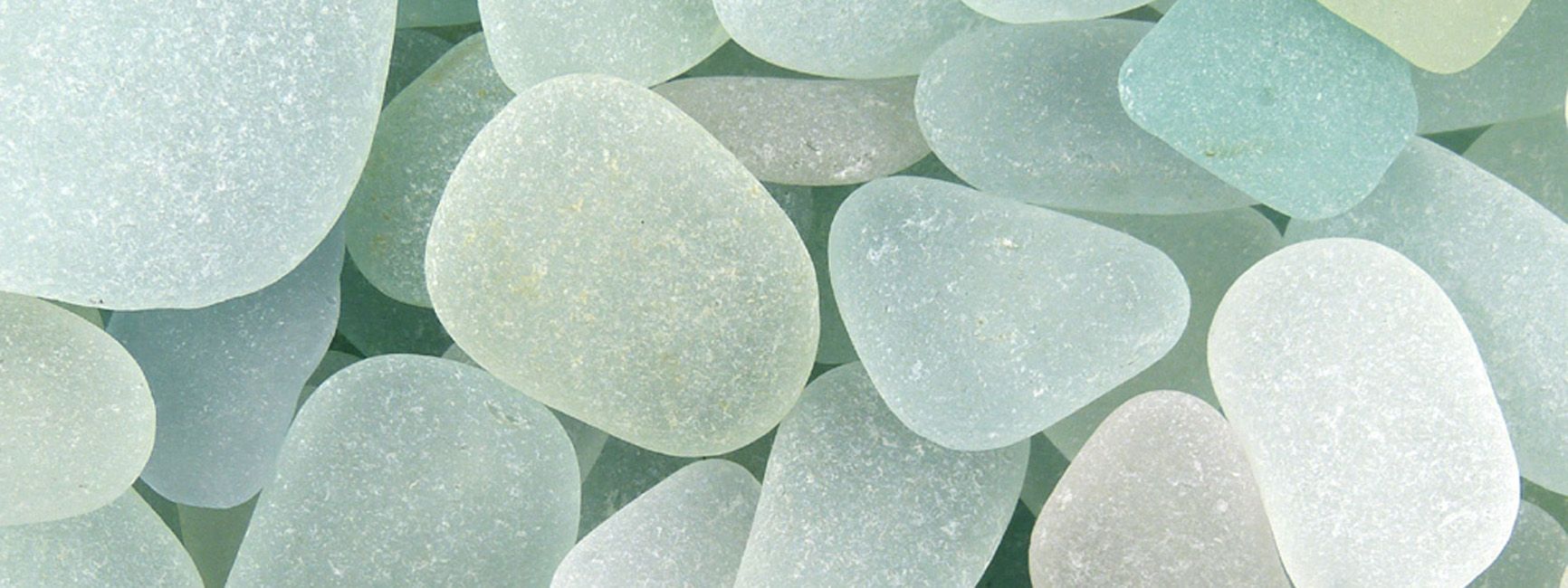
The characteristic frosted look of genuine sea glass is created through a combination of physical abrasion and chemical weathering. As the glass is rolled by waves and rubbed against sand and pebbles, its smooth surface becomes etched and textured. Saltwater also plays a role, helping to create the soft, matte finish that sea glass collectors love.
Common Sea Glass Colours
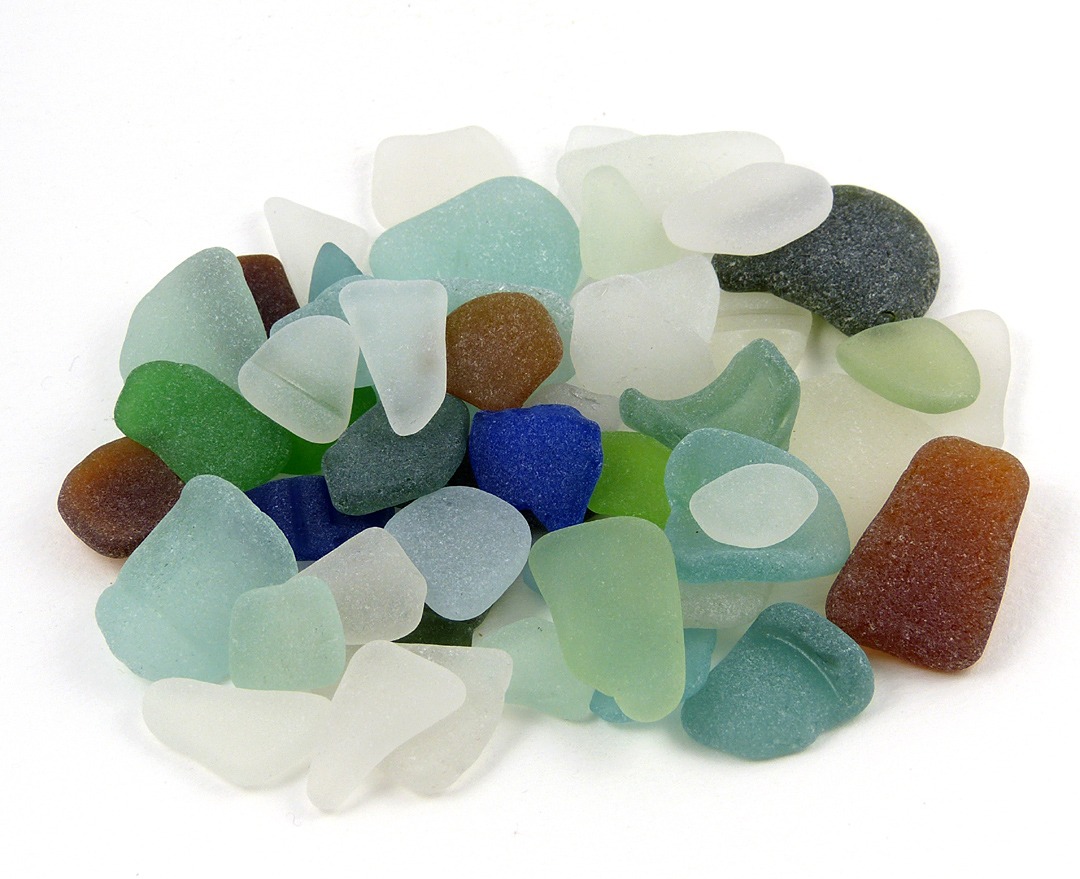
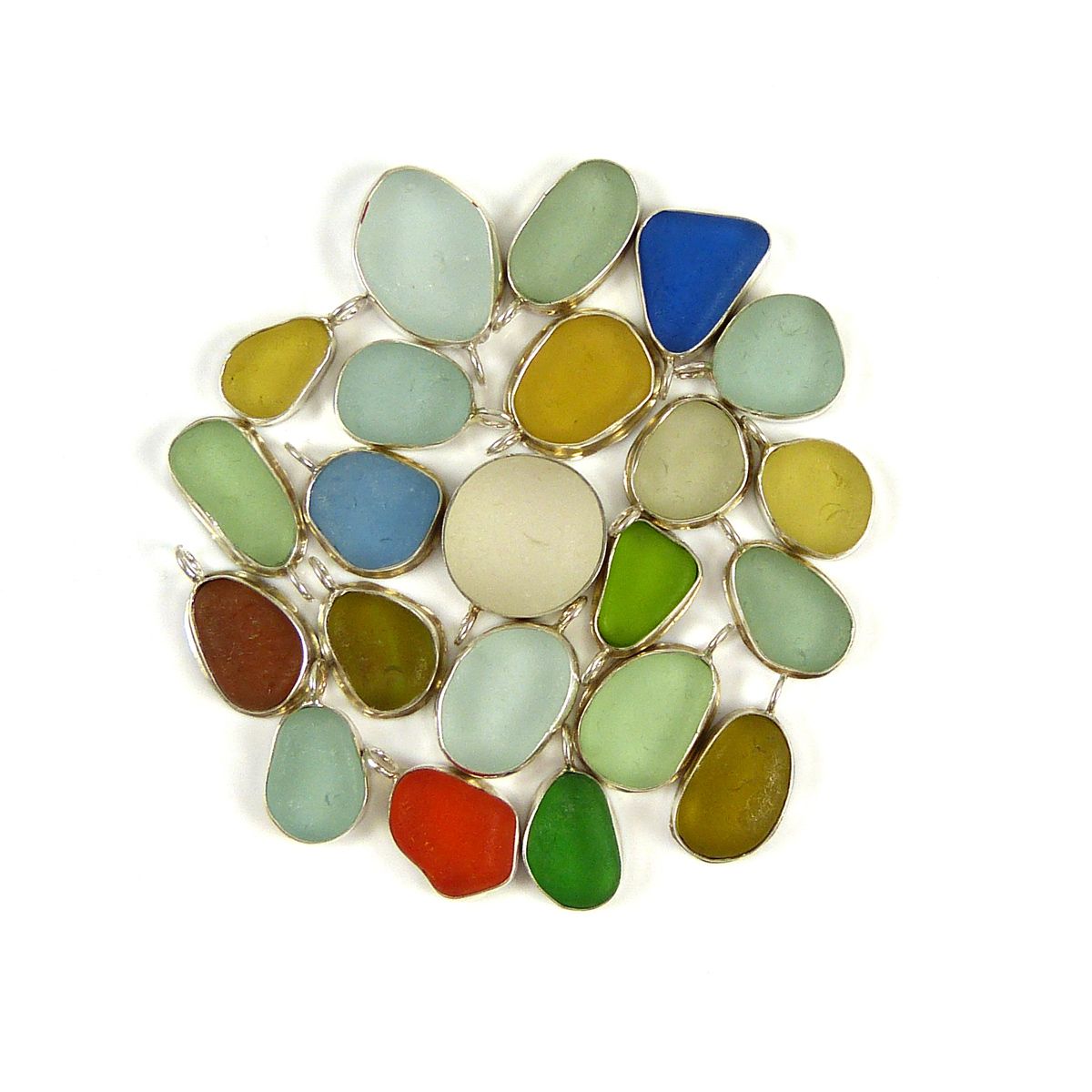
The colour of sea glass depends on its original source. The most common colours found on beaches are:
White or clear
Brown
Green
These colours typically originate from drinks bottles and household glassware.
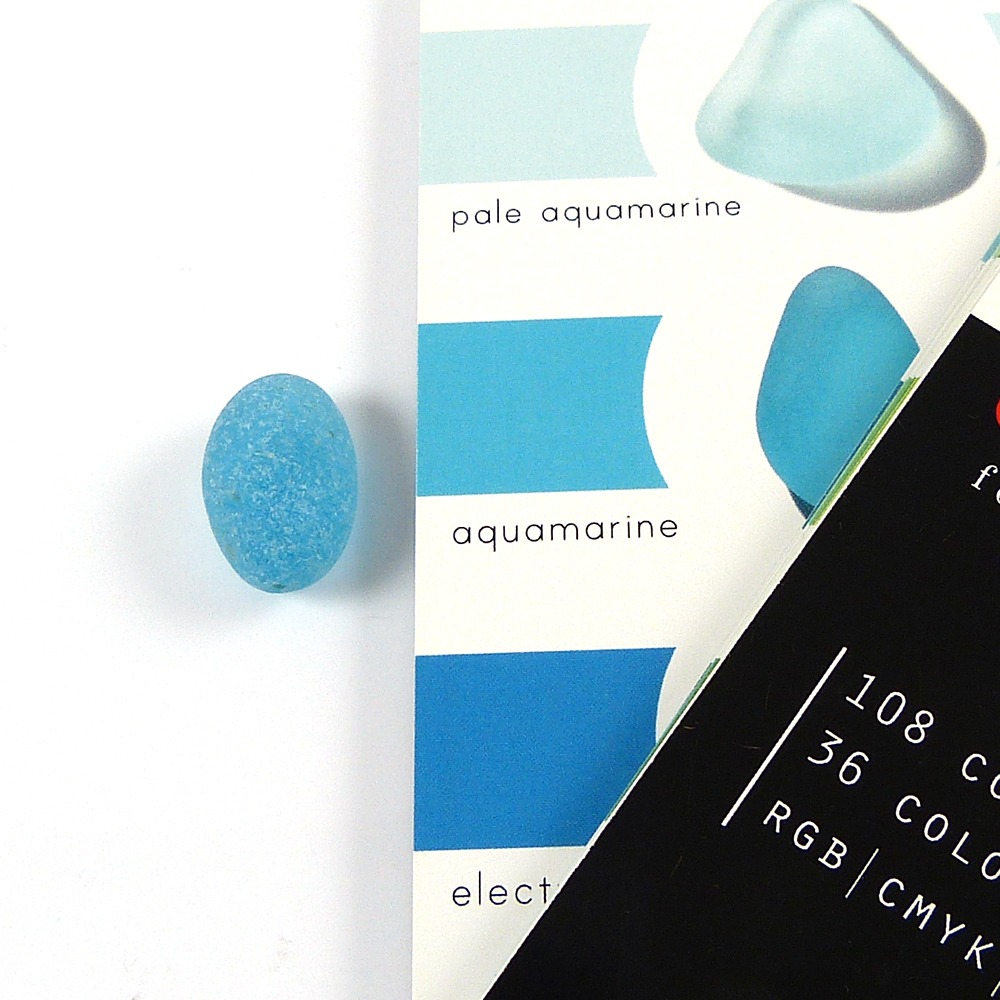
Less common colours include:
Seafoam blue
Cobalt blue
Aqua
Purple
Red
Orange
Rare colours are highly prized by collectors and jewellery makers because they are found far less frequently on beaches.
Sea Glass vs Beach Glass
Although the terms are often used interchangeably, there is a slight difference between sea glass and beach glass.
Sea glass is formed in saltwater environments such as seas and oceans, while beach glass is formed in freshwater locations such as lakes and rivers. Beach glass is often less frosted because freshwater creates different weathering conditions.
How Can You Tell If Sea Glass Is Genuine?
Authentic sea glass has several distinctive features:
Smooth, rounded edges
A naturally frosted surface
Tiny pits and weathering marks
No sharp edges
Irregular shapes
Artificially tumbled glass can look similar, but it often lacks the natural texture and character that genuine sea glass develops over decades in the ocean.
Finding Sea Glass on Northumberland Beaches
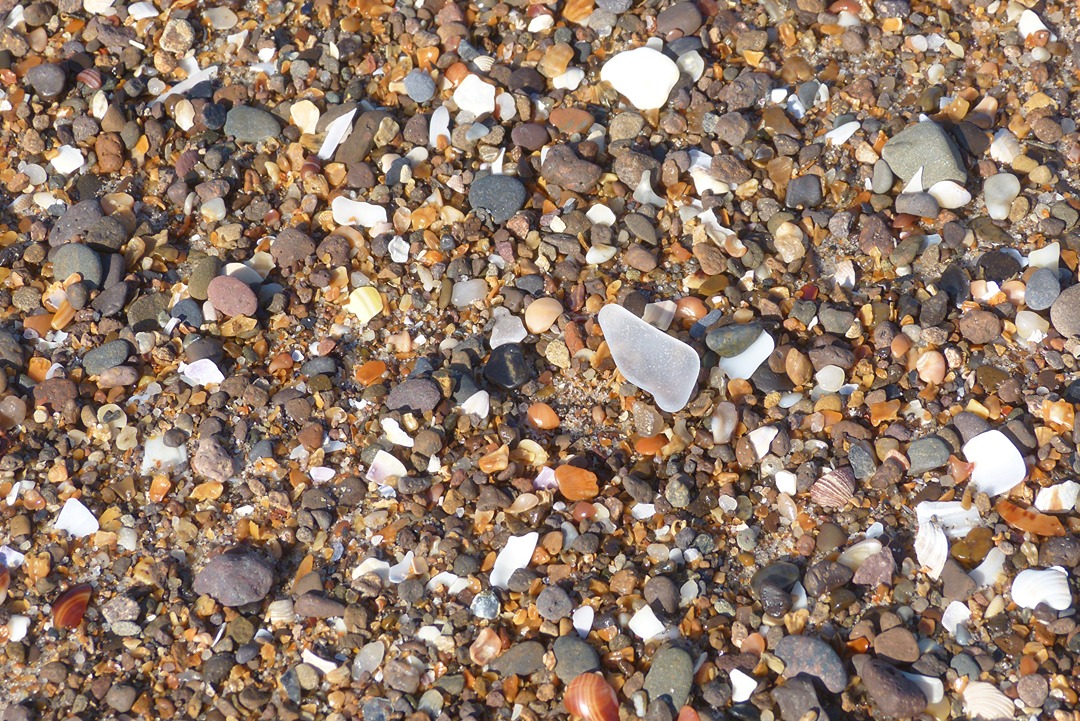
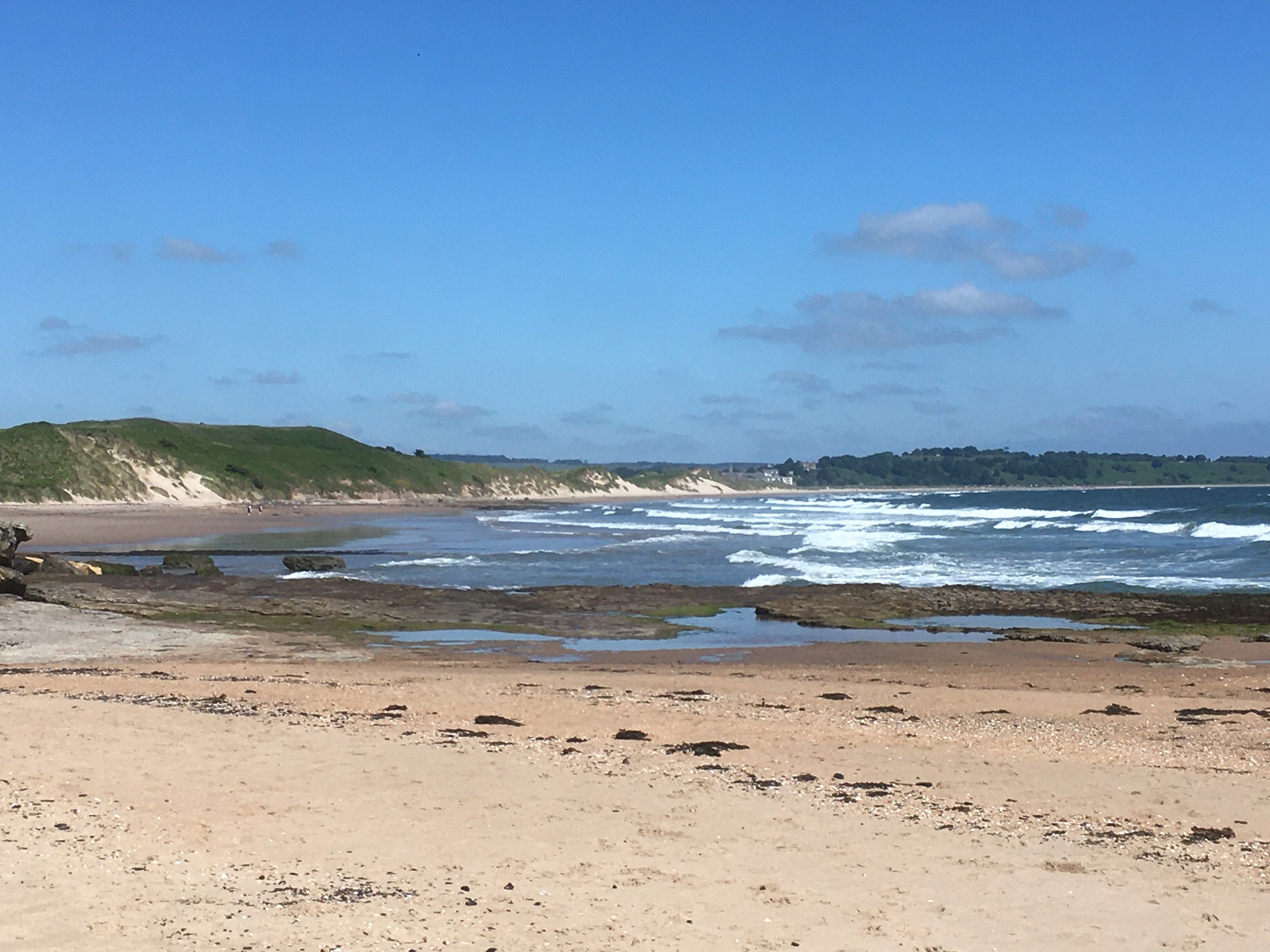
The beautiful Northumberland coastline is an excellent place to search for sea glass. Stormy weather, strong tides, and shifting sands can uncover pieces that have been hidden for years. Some of the best times to search are after storms or during low tide when fresh material has been washed ashore.
Every piece of sea glass tells a story. A fragment that began life as a bottle or household item may have spent decades being shaped by the North Sea before finally appearing on the beach.
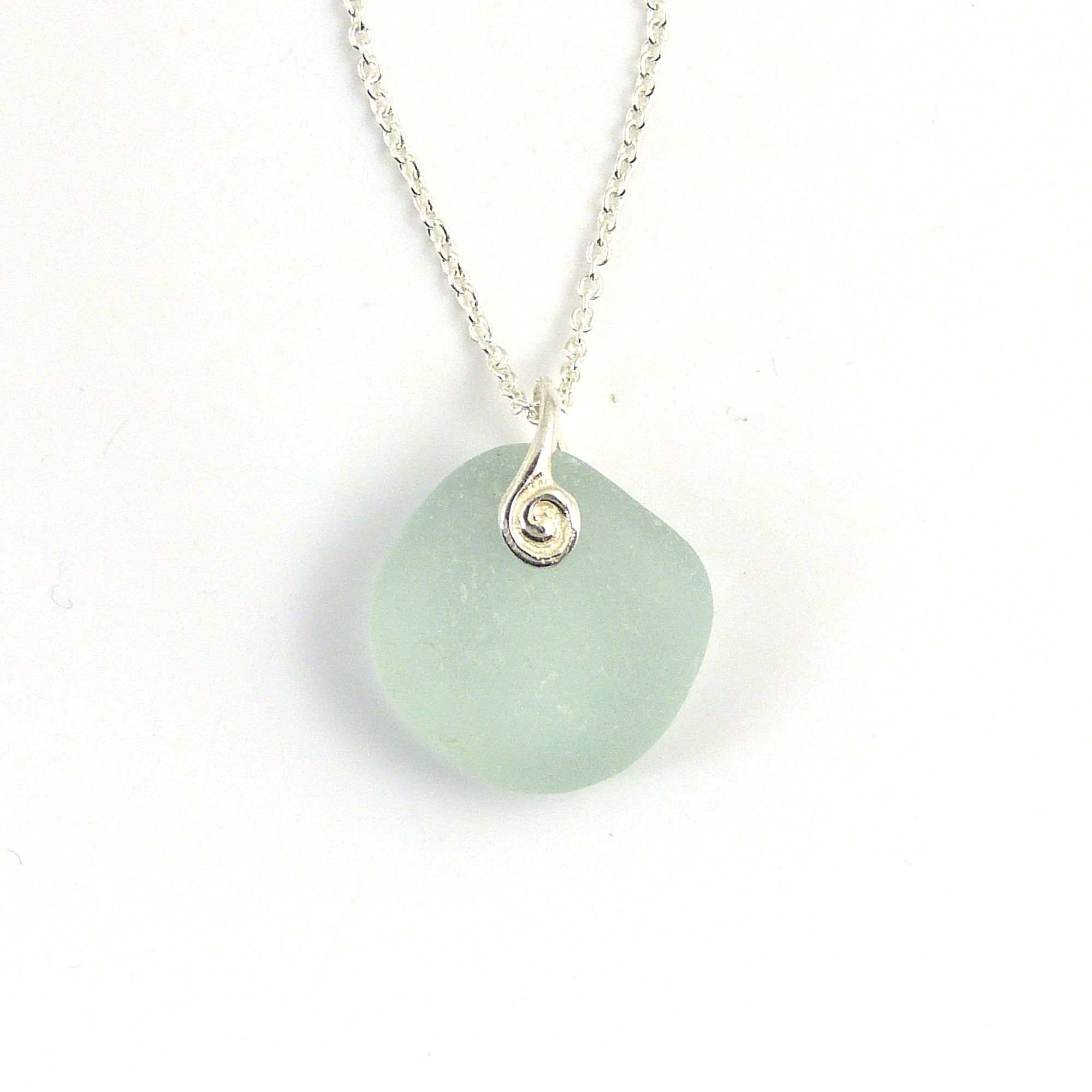
Sea Glass Jewellery
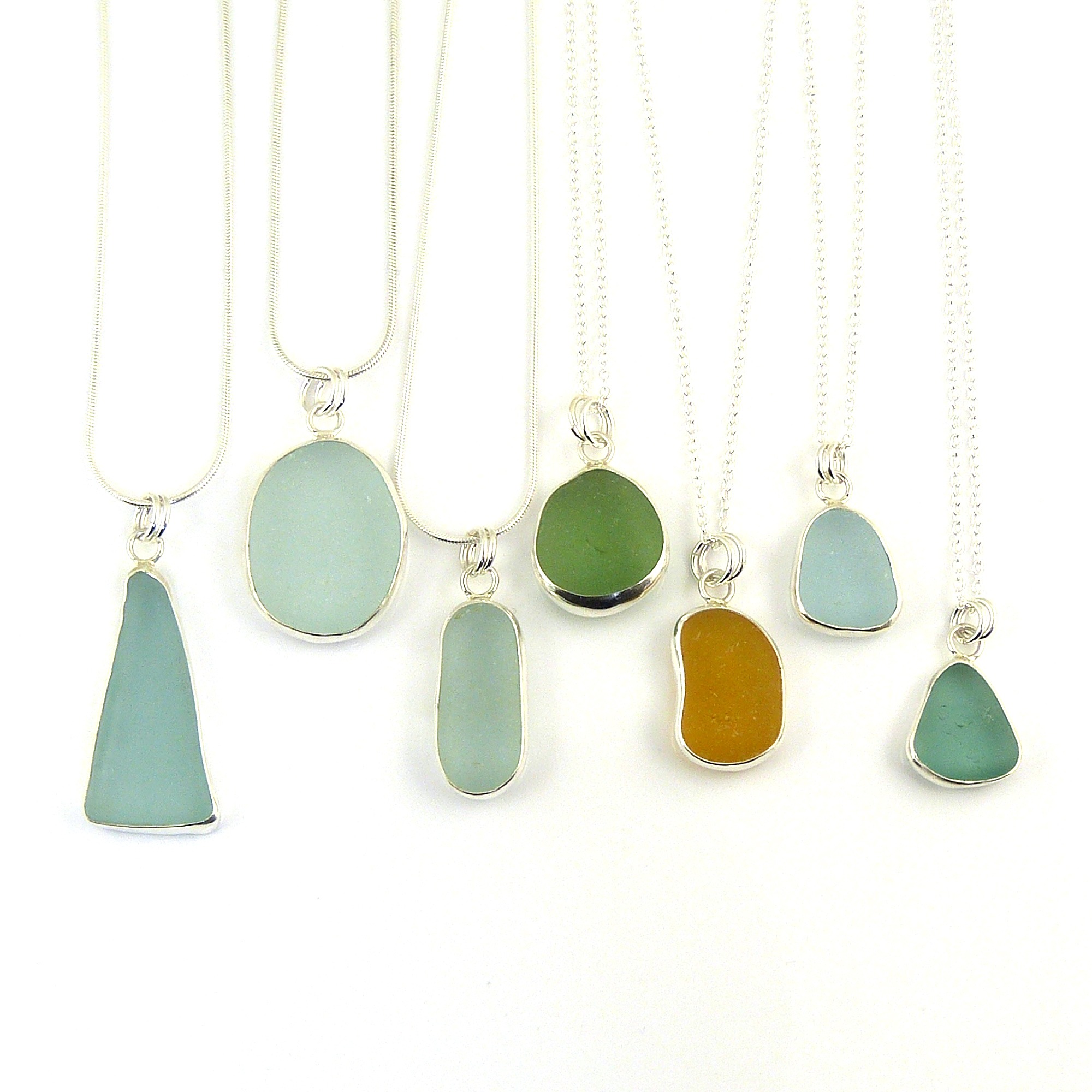
At The Strandline, we carefully collect genuine sea glass from the Northumberland coast and transform these naturally weathered treasures into unique sterling silver jewellery.
No two pieces are ever exactly alike. Each pendant, necklace, bracelet, or pair of earrings celebrates the beauty of the sea and the remarkable journey that turned discarded glass into a coastal treasure.
Whether you are a collector, beachcomber, or jewellery lover, sea glass offers a tangible connection to the sea and the ever-changing coastline.
Discover Genuine Northumberland Sea Glass
Browse our collection of handmade sea glass jewellery and bring home a piece of the Northumberland coast. Every piece of sea glass we use has been naturally shaped by the waves, making each item truly one of a kind.